Questions 1–3: The Wavelength Answers That Reveal Whether the Seller Understood Your Material
Question 1 — “Which wavelength do you recommend for my part, and why?” A confident answer names a material first and a wavelength second: 1064 nm for steel, aluminum, brass, copper and titanium; 355 nm for glass, clear plastic, thin-wall and heat-sensitive parts; 10.6 µm for cardboard, wood, leather, acrylic and textiles. The answer that should worry you is “our machine does everything” — a single wavelength physically cannot mark every material well, and a seller who says otherwise has not asked what you make. Question 2 — “What happens to my material under the beam?” You want to hear one of three mechanisms: oxidation (annealing), which darkens stainless steel and titanium without removing metal; melting, which raises a matte micro-relief for a bright code; or ablation, which vaporizes material for a deep mark. If the reply is only “it burns the surface,” you will get inconsistent contrast and, on thin parts, burn-through. Question 3 — “Can I see a sample marked on my own material?” A serious supplier marks your offcut, ships it, and records the recipe. A worrying answer is “everyone uses the same parameters” — because surface finish, alloy grade, plating, wall thickness and coating each move the window. On LAMBD equipment the baseline is a 30–50 µm spot on fiber, a 10–30 µm spot on UV, ±0.001 mm repeatability and a 0.01 mm minimum line width; those numbers are only meaningful if the recipe behind them was built on your part.
Questions 4–6: Power, Speed and Source Answers That Expose Marketing Arithmetic
Question 4 — “Is that marking speed a vector speed or a real cycle time?” Galvo scanners on the LM-11-3 reach 7000 mm/s, but that figure describes the mirror, not your part: actual throughput is set by hatch spacing, pass count, acceleration and part handling. A real answer quotes seconds per part — for example a 6-second cycle, roughly 600 parts per hour. A worrying answer quotes only the headline number and refuses to estimate your cycle. Question 5 — “How much power do I actually need, and what does the extra wattage buy me?” More watts buy depth or speed, not magic: 5–20 W covers jewelry, keys, gifts and one-off work on the T6 Mini; 20–30 W is the production default on the LM-11-3; 50–100 W on the LM-9-2 buys deep engraving up to 1.0 mm in steel and titanium or higher throughput. If a seller pushes a 100 W unit for marking anodized nameplates, he is selling you heat you will have to tune away. Question 6 — “What source is inside, who makes it, and what is its rated life?” Ask for the brand — Raycus, Max or JPT — and the number: a fiber source is rated around 100,000 hours, a 355 nm UV tube 20,000–30,000 hours.
Questions 7–9: Software, Variable Data and Integration Answers That Decide Your Real Cost
Question 7 — “What software runs the machine, and can I get a file into it in five minutes?” The answer you want names a real platform — EZCAD with a JCZ control board — and a real format list: BMP, JPG, GIF, PNG, TIF, AI, DXF, DST, PLT. The worrying answer is “proprietary software, we’ll send an operator”, because it means every future change — a new logo, a new part number — is invoiced. Question 8 — “How does variable data get in?” For any serialized product the answer must be Excel via CSV: serials, dates, lots and expiry imported in one step, with the log exportable to MES/ERP. If the reply describes typing each serial by hand, your line will not scale past a few hundred parts a day. Question 9 — “Can the cell verify what it just marked?” The strong answer pairs marking with a CCD camera that locates a randomly fed part and re-reads the code on-cell, checking 2D codes to ISO/IEC 15415 and linear codes to ISO/IEC 15416 — this is the LM-8-1 route, and on a conveyor it means the LM-10-1 flying marker synchronized through encoder and PLC. The worrying answer is “our quality is very stable, you don’t need verification”: no marker is stable enough to skip the check, and a bad serial that ships is worth far more than the camera.
Questions 10–12: Safety, Service and Warranty Answers That Separate a Supplier From a Seller
Question 10 — “What extraction and enclosure does this machine need?” The correct answer is specific: an enclosed Class 1 cell with interlock for production, and a HEPA + activated-carbon extractor at the marking point for wood, leather, acrylic, PVC-bearing work, copper and magnesium — because plume on the F-theta lens shifts focus and destroys repeatability within a single shift. On 355 nm systems it should also mention UV-rated eyewear and viewing windows, since UV radiation outside the beam path is invisible and biologically active. The worrying answer is “it’s low power, you don’t need extraction.” Question 11 — “What happens when it stops, and how fast?” Ask where the spare galvo, F-theta lens, source and chiller come from, whether commissioning can be done remotely, and whether one recipe library moves with you across machines. LAMBD’s answer is a shared spare-parts pool and one platform from the T6 Mini 5–20 W to the LM-9-2 50–100 W.Question 12 — “What exactly is under warranty, and for how long?” Get it in writing: 1 year on the machine, 2 years on the source is a defensible LAMBD terms; anything shorter, or a warranty voided by “improper parameters,” should be read twice.
Summary: The Answers That Worry You Are the Ones Without a Number
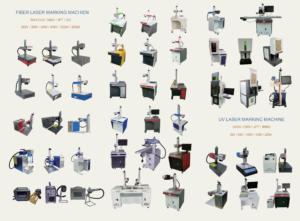
Every worrying answer in this article shares one trait: it contains no number, no material name and no sample. A wavelength recommendation without a material, a speed without a cycle time, a power figure without a source brand or hour rating, software without a format list, serialization without CSV, quality without ISO/IEC 15415 verification, safety without extraction and interlock, and a warranty without a term — these are not negotiations, they are warnings. The questions that protect your purchase are the measurable ones: 1064 nm / 355 nm / 10.6 µm matched to your part; 30–50 µm or 10–30 µm spot; ±0.001 mm repeatability and 0.01 mm line width; <0.5 kW draw from 220 V/50 Hz; a 100,000-hour fiber source or a 20,000–30,000-hour UV tube; a 6-second real cycle; EZCAD + JCZ with CSV variable data; CCD verification; HEPA + carbon extraction; and a 1-year machine / 2-year source warranty. LAMBD builds to exactly that specification across the T6 Mini 5–20 W, LM-11-3 20–30 W, LM-1-x MOPA 20–100 W, LM-9-2 50–100 W, UV-1-1, UV T3 3/5/10 W, CA2-1 30 W, CO₂-1-2 100 W and CO₂-3-4 — one software stack, one parts pool, one recipe library. For an English-site reader the conclusion is simple: buy the answer that comes with a number, a material and a sample, and treat every answer that comes without them as a cost you will pay later.
Post time: 11-25-2026