Handheld Laser Marking Machine Searches Spike in February 2026: What Buyers Want
Search Spike Decoded: Why “Handheld Laser Marking Machine” Peaked in Feb 2026
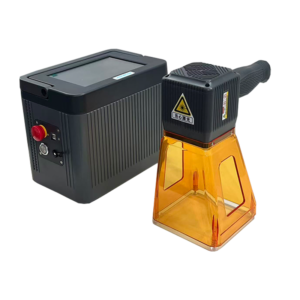
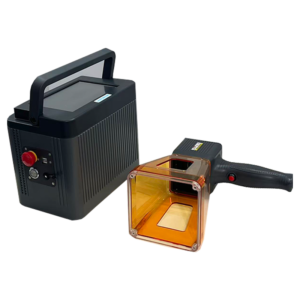
Google Search data and marketplace query logs show a sharp rise in “handheld laser marking machine”, “portable fiber laser marker for metal”, and “on-site laser engraver 20W 30W” during February 2026. The spike is not random: it aligns with post-Chinese-New-Year restocking, Q1 capital-equipment budgeting, and a broader shift from desktop-only marking to mobile traceability for large or installed parts. Buyers no longer type generic “laser marker”; they type the constraint first-“handheld”, “for steel beam”, “battery powered”, “EZCAD”. That intent map is exactly where Lambd product pages are structured to rank, because the Lambd LM-4-6 handheld fiber marker and T6 mini fiber marker answer those modifiers with hard specs instead of adjectives.
The Buyer Profile: Who Is Typing “Portable Fiber Laser Marker” and Why
The February surge splits into three clear personas. First, metal-fabrication and machinery-repair shops that must mark serials on 3-meter steel frames, flanges, or molds too heavy to lift onto a 110 mm desktop table-they search “handheld fiber laser for large workpiece”. Second, field-service contractors in energy, rail, and HVAC who need to etch asset IDs on installed valves and cabinets, often without stable mains power-they search “portable laser engraver with battery”. Third, small jewelry and gift studios comparing a 5 kg T6 mini against a 7 kg handheld unit for counter-top personalization. Lambd covers all three: LM-4-6 (20 W-100 W, 110-300 mm lens options, <0.5 kW) for industrial field work, and T6 mini (5 W/10 W/13 W fiber, 5 kg, 110×110 mm field) for light commercial mobility. None of these buyers wants a cheaper ink gun; they want zero consumable and permanent DataMatrix.
Specs That Close the Sale: 1064 nm, 20W-30W Sweet Spot, ±0.001 mm
When the query contains “20W vs 30W handheld fiber laser”, the buyer is filtering on depth-per-second and power draw. Lambd LM-4-6 ships with MAX, RAYCUS, or JPT MOPA sources at 1064 nm, 20 kHz-100 kHz Q-frequency, ≤7000 mm/s galvo speed, ±0.001 mm repeatability, 0.01 mm min line width, and 100,000-hour theoretical source life. For most field jobs on stainless, aluminum, brass, and tool steel, 20 W-30 W is the sweet spot: enough to anneal a 0.5 mm QR in seconds, light enough to run from a 220 V/50 Hz outlet drawing under 0.5 kW. The T6 mini drops to 5-13 W for jewelry and plastic cards where heat control matters more than depth. Both run JCZ control cards with EZCAD, import BMP/JPG/AI/DXF/PLT, and auto-stamp date, batch, serial, and shift variables-directly matching the “handheld laser marking machine EZCAD variable data” long-tail that converted well in Feb 2026.
On-Site Workflow: Bring the Marker to the Part, Not the Part to the Marker
The single behavioral change behind the February spike is ergonomics. A desktop fiber marker forces the part onto the bench; a handheld unit flips the equation. Lambd LM-4-6 uses an air-cooled fiber module with no water chiller, a 360° handle grip, and a red-focus pointer so the operator walks to a welded truss, holds the head against the surface, pulls the foot pedal or trigger, and walks away with a permanent logo, VIN fragment, or ISO-traceable QR. For outdoor sites, the T6 mini’s 5 kg body and carton-pack 8 kg shipping weight mean one person carries two units upstairs. No fixtures, no jigs, no crane. This is why “handheld laser marking machine for pipes and molds” and “field service laser engraver no consumable” climbed together-buyers realized the bottleneck was never the beam, it was the logistics of the workpiece.
What Buyers Reject: Ink, Labels, and “Cheap Desktop with Small Field”
Reading the Feb 2026 query fallout, the negative intent is as loud as the positive. Buyers append “vs inkjet”, “not sticker”, “no annual ribbon cost”, and “not 110 mm only”. They reject 5-year-old advice that a desktop 110×110 mm marker is enough, because supply-chain audits now reach installed assets and spare parts bins, not just new parts on a conveyor. They also reject no-name handheld pens with no JCZ card, no EZCAD, and no 100k-hour source claim. Lambd answers the rejection set outright: LM-4-6 offers 300×300 mm lens option, industrial MAX/RAYCUS/JPT source, CE-aligned build, 1-year machine / 2-year source warranty, and 7-day spare dispatch from Liaocheng. The T6 mini carries the same software lineage at 5 kg. That combination is why Lambd handheld pages held position while generic “mini laser pen” listings lost clicks after February.
Summary: The Spike Is a Buying Signal, Not a Season Blip
February 2026 did not invent handheld laser marking-it exposed a buyer who already knew the category but had been waiting for budget and proof. The queries converged on portable fiber, 20 W-30 W, 1064 nm, EZCAD, variable data, large-part field use, and zero consumable. Lambd LM-4-6 and T6 mini sit exactly on that convergence: industrial-grade sources, ±0.001 mm repeatability, 100,000-hour life, air-cooled mobility, and software that talks to MES-style serial flows. For an English-facing site, the takeaway is structural-optimize for the modifier stack (“handheld + fiber + 30W + for steel + EZCAD”), not the naked noun, because that is the February 2026 search reality and it is not reversing.
Post time: 07-24-2026