
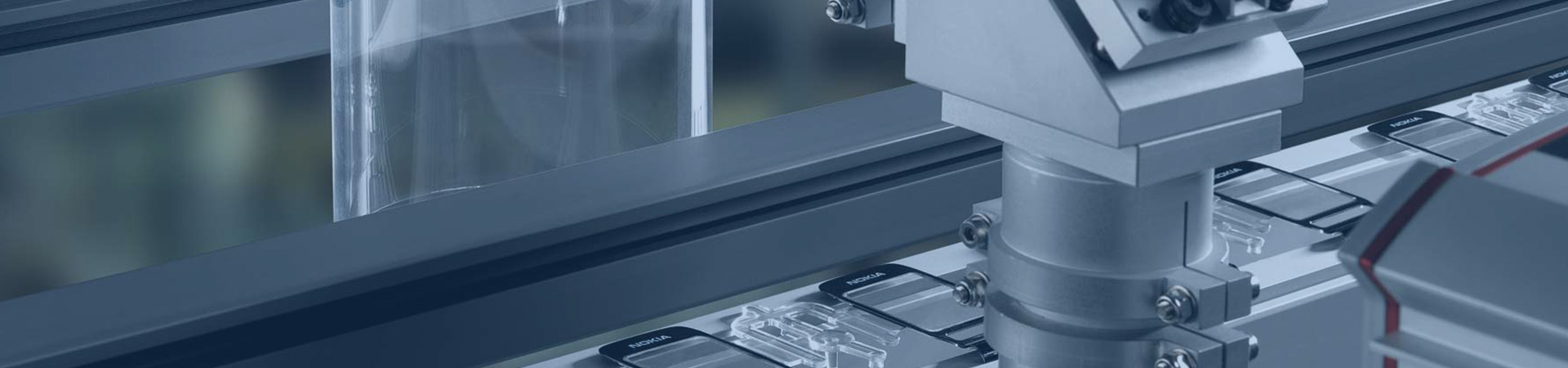
Why Hard Plastics Are the Trickiest Material Family to Mark
Hard plastics look simple until you try to mark them. ABS, PVC and PC share almost nothing at the molecular level: ABS is a styrene-based terpolymer with good beam absorption, PVC is chlorine-rich and releases corrosive gas when overheated, and polycarbonate (PC) has high optical clarity and a high glass-transition temperature, so it either absorbs poorly or chars. A 1064 nm fiber beam, optimised for steel and aluminium, often glints off plastic, melts the surface or leaves a grey, uneven stain; a CO₂ 10.6 µm beam is absorbed by many organics but can cut, warp or burn edges on thin parts; a 355 nm UV beam breaks molecular bonds coldly at 0.1–1 µm depth and is therefore the safest for heat-sensitive, clear and thin-wall plastics. The buying rule for an English-site visitor is not “which laser is newest,” but which wavelength the polymer tolerates. LAMBD covers the full decision with T6 Mini / LM-11-3 / LM-1-x fiber (1064 nm), UV T3 3/5/10 W (355 nm, water-cooled 20–25 °C ±0.5 °C, 20,000–30,000 h tube life) and CA2-1 30 W / CO₂-1-2 100 W / CO₂-3-4 (10.6 µm) — one EZCAD + JCZ software stack, one set of operator skills, and variable data from Excel via CSV. Match the wavelength to the plastic first; only then talk about power, speed and price.
ABS and PVC: Fiber Is the Production Default, UV Is the Precision Option
For ABS (the common case), 1064 nm fiber is the default: it gives a fast, permanent black or grey mark at 15–30% power, 30–60 kHz, 500–1200 mm/s, 1–2 passes on LM-11-3 30 W, and the same part can be marked in under a second. Black ABS accepts fiber well; light-coloured ABS may need a higher-frequency MOPA (LM-1-5 20–30 W / LM-1-6 50 W, pulse <10 ns–~200 ns, up to 4000 kHz) for a cleaner edge. PVC is where discipline matters more than power: it is chlorinated, so excessive energy produces HCl and surface pitting. Use fiber at 10–20% power, 40–80 kHz, 600–1500 mm/s, 1 pass, keep the mark shallow, add fume extraction, and never deep-engrave PVC on a high-power machine — LAMBD treats PVC as a marking-only material. For high-gloss, thin-wall, transparent or medical-grade ABS/PVC where a burnt smell or edge melt is unacceptable, switch to UV T3 at 355 nm: the cold process leaves a white or frosted code on black ABS and a clean, crack-free mark on PVC without the heat-affected zone. The T3 5 W model, for example, is rated around 1000 W chiller draw, 20–25 °C ±0.5 °C crystal control, 20,000–30,000 h tube life, and delivers a 0.01 mm line at ±0.001 mm repeatability — ideal for a serial number or micro-QR on a casing. These are starting-point recipes, not universal settings: colour, filler, gloss, wall thickness and flame retardant change the result, so LAMBD always recommends a 30-second sample and a saved EZCAD recipe before production.
Polycarbonate and Clear/Coloured Plastics: UV Wins, CO₂ Cuts
Polycarbonate (PC) is the material that most often exposes the wrong wavelength choice. Its high clarity and heat resistance make 1064 nm fiber unreliable — you get a weak stain, a burnt ring or no mark at all — while 10.6 µm CO₂ is absorbed and can mark, but the edge effect is aggressive: the part may warp, the mark may be too deep, and clear PC can craze. For clear, tinted, frosted or thin-wall PC, LAMBD recommends UV 355 nm: it marks by photochemical ablation, not bulk heating, so a clear lens or transparent cover stays optically clean and a thin-wall part stays flat. On black PC, UV T3 gives a high-contrast white code; on clear PC, a frosted Data Matrix; on coated PC, a clean logo without lifting the coating. CO₂ 10.6 µm still has a place, but as a cutting and deep-marking tool rather than a precision code marker: CA2-1 30 W frosts and cuts acrylic and some coated PC signs at 20–40 W, 200–500 mm/s, 1–2 passes, while CO₂-1-2 100 W and CO₂-3-4 handle larger panels and signage. The dividing line is simple — if the job is a permanent serial, QR, logo or medical code on a finished part, choose UV; if it is cutting sheets, letters, displays or thick panels, choose CO₂. LAMBD keeps both in one catalogue and one software family, so a workshop can mark casings with UV and cut display stands with CO₂ without retraining operators.
Coloured, Filled and Flame-Retardant Plastics: Read the Part, Not the Name
Two parts sold as “ABS” can behave like different materials once colour, filler and flame retardant enter the mix. White, grey and pastel ABS absorb less at 1064 nm and tend to mark lighter, so increase frequency into the MOPA range or move to UV; black ABS with carbon black absorbs strongly and marks dark and fast. Glass-filled nylon and ABS conduct heat into the filler and can leave a rough, burnt mark — lower power, higher speed and a fume extractor are mandatory. Flame-retardant (FR) grades of ABS, PC and PVC release more gas and odour, so never mark them in an open workshop without extraction, and keep the pass count low to avoid surface degradation. Soft-touch, TPE and rubberised coatings melt easily; use UV or very low-power fiber only. Transparent acrylic and clear PC need UV for a code but CO₂ for cutting — a common LAMBD workflow is UV T3 for the serial and CO₂-1-2 for the shape. The practical protocol is: (1) identify the exact resin and colour, (2) run a three-wavelength test on one part — fiber at low power, CO₂ at low power, UV at standard power, (3) compare contrast, edge, odour and post-mark flatness, (4) cycle the part through washing and handling to simulate use, (5) save the winning recipe by resin + colour + wall thickness in EZCAD. Because every LAMBD fiber, UV and CO₂ system shares files and CSV variable data, the same serial number can move from a UV-marked PC casing to a CO₂-cut acrylic plate without re-entering the database.
Buying the Right LAMBD Wavelength and Building a Repeatable Process
Selection is a three-step decision. Step 1 — define the part. If it is a metal-and-plastic assembly, start with fiber 1064 nm: T6 Mini 5–20 W for low volume and jewellery, LM-11-3 20–30 W for production ABS/PVC, and LM-1-x MOPA 20–100 W when colour or high reflectivity matters. Step 2 — define the plastic. If it is clear, thin-wall, medical, electronic or heat-sensitive PC/ABS/PVC, choose UV T3 3/5/10 W and a water chiller at 20–25 °C ±0.5 °C; budget for the higher CapEx and the 20,000–30,000 h tube life. Step 3 — define the operation. If it is cutting, signage, displays, wood or leather as well as marking, add CO₂: CA2-1 30 W for the bench, CO₂-1-2 100 W for roll-fed and batch work, CO₂-3-4 for large format. The EZCAD + JCZ workflow then unifies everything — BMP, JPG, GIF, PNG, TIF, AI, DXF, DST and PLT files, red-light focus, motorised Z and CSV-driven serial numbers, dates, lots and QR codes. Process control is what turns a good wavelength into a sellable result: clean the F-theta lens, fit a fume extractor for PVC and FR grades, warm the UV chiller for 4–6 minutes, lock the recipe to the exact resin and colour, and verify every code with a scanner to ISO/IEC 15415 grade and a CCD camera on LM-8-1 or LM-9-2. For an English-site buyer the conclusion is direct: treat ABS, PVC and PC as three different materials, prove the wavelength on a real part, and let LAMBD supply the fiber, UV and CO₂ line that matches the plastic — not the other way around.
Summary: Match the Wavelength to the Plastic, Not the Marketing
ABS, PVC and PC cannot be marked by guesswork. ABS is the fiber-friendly default at 1064 nm (15–30% power, 30–60 kHz, 500–1200 mm/s), PVC is a low-power, well-extracted marking-only job on fiber (10–20%, 40–80 kHz, 600–1500 mm/s), and PC — especially clear, thin-wall and heat-sensitive grades — is the domain of UV 355 nm, which marks coldly without warping, burning or crazing. CO₂ 10.6 µm is the cutting and large-format tool for organics, not the first choice for a precision code on a finished plastic part. LAMBD supports all three decisions with a single ecosystem: fiber (T6 Mini, LM-11-3, LM-1-x, LM-9-2), UV (UV-1-1, T3 3/5/10 W) and CO₂ (CA2-1, CO₂-1-2, CO₂-3-4), all on EZCAD + JCZ, all sharing CSV variable data, all capable of 0.01 mm lines at ±0.001 mm repeatability where the wavelength permits. The buying discipline is to test the real part — resin, colour, filler, flame retardant and wall thickness — then lock the recipe and verify the code by scanner and CCD. For an English-site audience, the takeaway is clear: a laser does not choose the plastic; the plastic chooses the laser, and LAMBD is set up to supply whichever wavelength the part demands.
Post time: 10-12-2026