How to choose a laser marking machine for metal marking?
1. Key selection factors: laser type and power
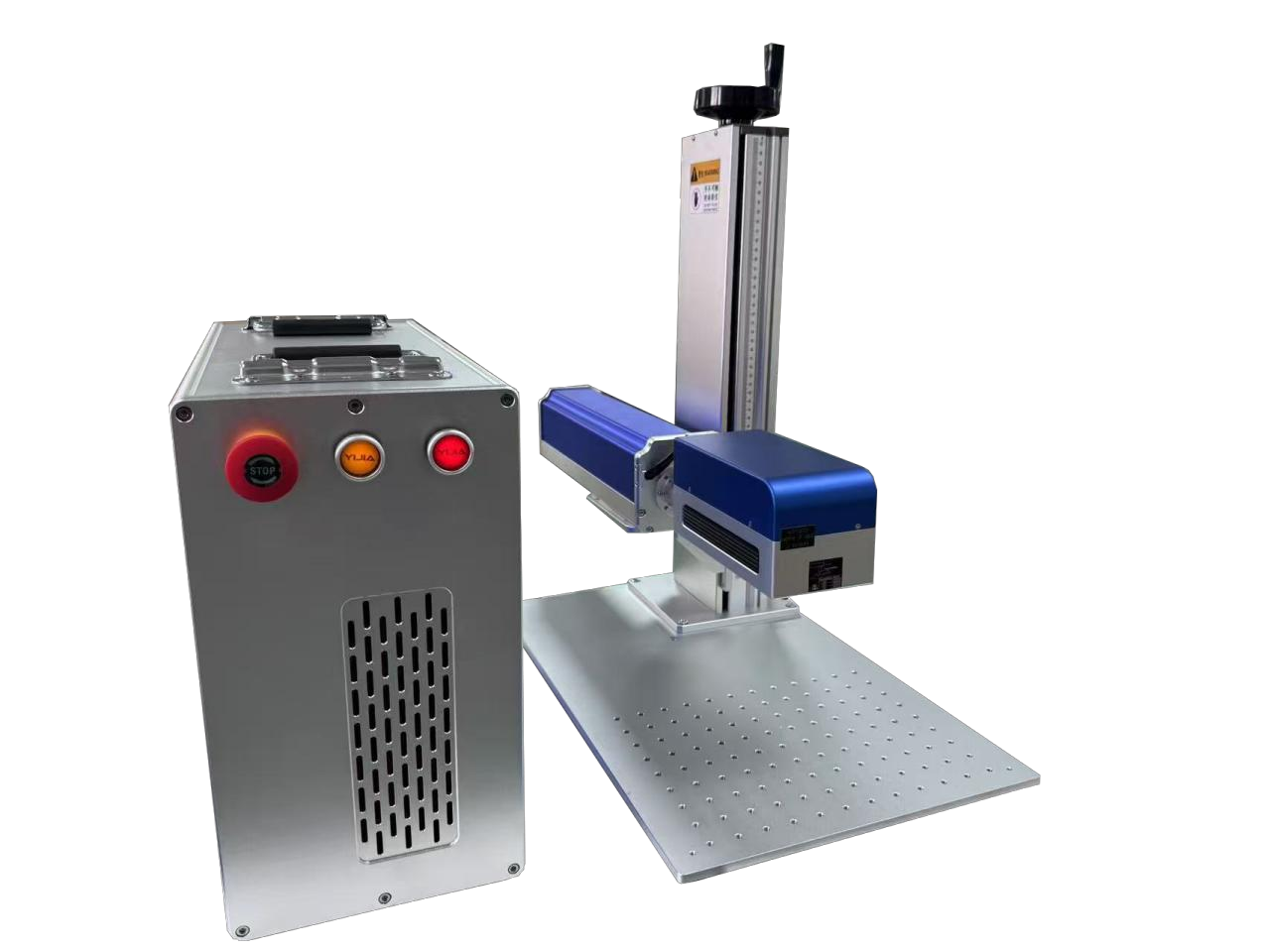
When choosing a laser marking machine for metal, the first and most important decision is to determine the type of laser light source. For most metals, including steel, aluminum, titanium, brass, and copper, fiber lasers are the optimal and popular choice. They produce a beam with a wavelength of approximately 1.06 microns that is excellently absorbed by metal surfaces, resulting in clear, high-contrast and long-lasting marking. In contrast, CO2 lasers (wavelength 10.6 μm) are mainly suitable for coatings on metal surfaces (such as paints) or marking of certain plastics, rather than the metal substrates themselves. For stainless steel color marking or handling sensitive materials, MOPA lasers and UV lasers can also be considered. The next key parameter is laser power, measured in watts (W). For most metal marking, engraving and coating removal tasks, 20W, 30W or 50W power is sufficient. Higher power, such as 100W and above, provides faster engraving speeds and depths, which are crucial for industrial batch tasks. Power directly affects production speed and, in turn, return on investment.
2. Technical specifications and system capabilities
After selecting the laser type and power, other important system technical parameters need to be evaluated. The work format determines the maximum size of the markable area. For marking small parts (such as chips, tools), a 100x100 mm format may be sufficient, while for large-size sheets or simultaneous marking of multiple parts, a format of 300x300 mm or larger is required. Positioning accuracy and repeatability are guaranteed by the quality of the galvanometer scanning head and linear guides. This parameter is crucial for high-precision tasks such as medical implant marking. Marking speed is measured in millimeters per second and directly depends on the laser and optical system. Modern fiber laser marking machines can reach speeds of more than 7,000 mm/s. Software is just as important. Good software makes it easy to create and edit vector graphics, serial numbers, barcodes (DataMatrix, QR), and manage databases for dynamic marking. Also pay attention to the cooling system (air cooling is usually more compact, water cooling is more effective for high loads) and whether it is equipped with a fume extraction system to keep the marking clean and protect the optics.
3. Integration, Operation, and Service
Choosing the right model is only half the success. It's equally important to assess how a marking machine fits into your production workflow. For automated production lines, convenient integration through industrial interfaces (Ethernet, digital I/O) and compatibility with PLC, SCADA, or MES systems is crucial. If you plan to mark various parts, ensure that the clamping and positioning system is convenient and reliable (such as worktables with vacuum suction, rotary axes, or conveyor interfaces). Ergonomics and reliability are also important: a sturdy housing, intuitive operation interface, low noise, and minimal maintenance needs can improve overall efficiency. Finally, carefully review the warranty conditions, spare parts availability in your region, and the quality of technical support offered by the supplier. Reliable service that can respond quickly to requests and train your personnel can prevent long-term downtime in the future. Before purchasing, be sure to request a free test marking on your samples to visually evaluate the quality, speed, and contrast of the markings.
4. Conclusion
Choosing a laser marking machine for metals is a strategic decision that affects your production efficiency and product quality. Focus on mature fiber laser technology, select the optimal power for your tasks, evaluate key technical specifications (working area, speed, software), and ensure the supplier can provide comprehensive integration and after-sales support. By investing time in a thorough analysis, you will gain a reliable partner that delivers clear, fast, and durable markings on your metal products, built to last.
5.Future Trends and Long-Term Considerations
As metal manufacturing evolves toward smart, sustainable, and highly customized production, laser marking technology is advancing in tandem to meet emerging industry demands. For instance, the integration of artificial intelligence (AI) into laser marking systems is enabling adaptive marking—machines can automatically adjust parameters in real time based on material variations, surface conditions, or design complexity, ensuring consistent quality even with non-uniform metal substrates. Additionally, the rise of circular economy principles is driving demand for laser marking solutions that support traceability throughout a product’s lifecycle, from raw material sourcing to end-of-life recycling.
British manufacturers, in particular, are leveraging laser marking to comply with strict EU and UK regulations on product traceability, such as those in the aerospace and automotive sectors. When selecting a laser marking machine, it’s also wise to consider its scalability: modular systems that allow for future upgrades (e.g., adding a rotary axis for cylindrical parts, integrating a vision system for precise alignment) can grow with your business, avoiding the need for a full replacement down the line. By staying attuned to these trends and prioritizing flexibility alongside core performance, businesses can invest in a laser marking solution that not only meets current needs but also positions them for success in the evolving industrial landscape.
Post time: 02-06-2026