Fiber 1064 nm Remains the Volume Leader for Metal Traceability
The 2026 laser marking market is led by fiber lasers at 1064 nm because metal lines need permanent, high-contrast, zero-consumable identification. Third-party forecasts differ by scope — broad "laser marking and engraving" models quote 2026 demand from about $4.8 billion to over $11 billion, with fiber holding roughly 50–63% of unit or revenue share across industrial installations — but the direction is the same: automotive, EV battery, aerospace, medical and general metal parts are moving from ink, labels and dot-peen to galvo fiber markers. A lambd fiber cell covers steel, aluminum, brass, copper, titanium, magnesium and zinc with one wavelength. Bench and desktop models such as T6 Mini 5–20 W and LM-11-3 30 W use air cooling, draw <0.5 kW from 220 V/50 Hz, deliver ±0.001 mm repeatability, 0.01 mm minimum line width and galvo speeds up to ≤7000 mm/s on production galvo heads (compact T6 Mini is rated up to ≤5000 mm/s), with a 100,000-hour source rating. Enclosed high-power options such as LM-9-2 50–100 W add Class 1 safety, CCD vision and 24/7 throughput for Tier-1 traceability. For buyers comparing TCO, fiber wins on uptime: no ink, no solvent, no printhead, no label stock, and recipe-based marking through EZCAD + JCZ with variable data from Excel via CSV.
UV 355 nm Is the Fast-Growth Segment for Heat-Sensitive Parts
UV laser marking at 355 nm is the fastest-expanding segment in 2026 because electronics, medical and packaging buyers need cold processing. Industry summaries put UV/cold-marking demand growth well above the fiber average in precision niches — driven by PCB/FPC micro-QR, semiconductor and sapphire codes, transparent acrylic, glass vials, ampoules, syringes, catheters and heat-sensitive films where 1064 nm would burn or warp . A lambd UV T3 Split 3/5/10 W uses third-harmonic conversion from 1064 nm to 355 nm, runs water-cooled with crystal temperature control around 20–25 °C ±0.5 °C, and is rated for a 20,000–30,000-hour UV source life. Because photons break molecular bonds instead of heating the bulk material, the heat-affected zone is minimal: ampoule codes, glass Data Matrix and medical polymer marks stay crack-free and pass ISO/IEC 15415 readability targets. The trade-off is cost — UV CapEx is higher than fiber, and throughput per watt is lower — so lambd positions T3 for precision batches rather than high-volume metal tags. For an English-site buyer, the buying rule is simple: if the substrate is transparent, thin, medical or electronics-grade and cannot take heat, choose 355 nm; if it is metal or hard anodized plastic, choose fiber.
CO₂ 10.6 µm Stays Mature for Packaging, Wood and Leather
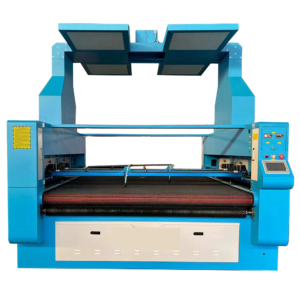
CO₂ lasers at 10.6 µm are the stable, mature wavelength for non-metal coding. Market data show packaging laser marking growing at a steadier pace — about 5.8% CAGR to 2036 in one packaging-focused forecast — because food, beverage, pharma and secondary cartons replace inkjet with permanent date, lot and QR codes . Organic substrates absorb 10.6 µm far better than 1064 nm: cardboard, wood, acrylic, leather, rubber, glass coating and some films mark by local carbonization or foam-free engraving with no ink and no ribbon. lambd covers this with CA2-1 30 W for bench and small-batch non-metal, CO₂-1-2 100 W for roll-fed fabric, leather and tags, and CO₂-3-4 split for large-format signage and plates. CO₂ does not replace fiber on metal — reflectivity is too high — but it is the right answer for apparel care codes, hang tags, denim stone-wash effects, wooden gifts and acrylic branding. In a mixed workshop, lambd runs CO₂ next to fiber and UV under one EZCAD + JCZ stack, so operators handle fabric, cardboard and metal hardware without learning three software packages.
Regulatory Traceability and ESG Push All Three Wavelengths Up
Market growth in 2026 is not only technical — it is regulatory. UDI rules push medical stainless and titanium to permanent anneal or ETCH marks; IATF 16949 and battery-passport requirements push automotive and EV busbars to fiber Data Matrix; EU MDR, pharma serialization and Честный ЗНАК / EAC programs push permanent scannable codes instead of printed labels; CE and RoHS preferences push factories away from solvent inks and VOC-emitting processes . ESG adds a second driver: zero-consumable marking removes ink waste, label liner and printhead disposal. lambd supports this with material-specific recipes — stainless anneal at 60–80 kHz, 800–1500 mm/s for black UDI with no material removal; anodized aluminum at 20–30% power, 40 kHz, 1500 mm/s for white/black branding; MOPA color on LM-1-x for thin-film interference shades; UV T3 for pharma cold coding; CO₂ CA2-1 for carton date codes. Because every wavelength shares EZCAD variable data, a quality team can export one CSV job list and mark metal, plastic, glass and cardboard with audit-grade readability at 99.8%+ contrast under ISO/IEC 15415.
Buying Forecast 2026: Match Wavelength to Material, Not Hype
The 2026 procurement trend is "right wavelength, right throughput, one software stack." For metal nameplates, tools, fasteners, EV parts and jewelry, fiber is the default: start with T6 Mini 5–20 W for benches, LM-11-3 20–30 W for standard production, LM-1-x MOPA 20–100 W for color/white/high-reflective alloys, LM-9-2 50–100 W for deep engraving to 1.0 mm and 24/7 cells, LM-4-6/4-8/4-9 handheld for pipes/frames, LM-10-1 flying for conveyor date/lot/QR, and LM-8-1 CCD for vision alignment. For PCB, glass, ampoules and heat-sensitive plastic, choose UV T3 3/5/10 W. For cardboard, wood, leather, acrylic and roll fabric, choose CO₂ CA2-1 30 W, CO₂-1-2 100 W or CO₂-3-4. Budget models should still price five-year TCO, not just CapEx: fiber recurring cost is mostly electricity and lens tissue; UV adds chiller power and periodic crystal service; CO₂ adds optics cleaning and extractor run-time. Across a 5-year metal line, fiber usually displaces CIJ/label printers with payback in 12–30 months, while UV and CO₂ win on defect reduction, compliance and scrap avoidance rather than pure ink savings.
Summary: Three Wavelengths, One Permanent-Marking Direction
The 2026 laser marking market is growing across all three core wavelengths but for different reasons: fiber 1064 nm leads volume and TCO on metal and hard plastic, UV 355 nm leads precision growth on heat-sensitive electronics and medical parts, and CO₂ 10.6 µm remains the mature, cost-effective choice for packaging, wood, leather and acrylic. lambd turns that forecast into a buyable portfolio — T6 Mini, LM-11-3, LM-9-2, LM-1-x MOPA, handheld and flying fiber models for 1064 nm; UV T3 3/5/10 W for cold marking; CA2-1, CO₂-1-2 and CO₂-3-4 for 10.6 µm non-metal. Common specs that matter to buyers are ±0.001 mm repeatability, 0.01 mm line width, up to ≤7000 mm/s galvo speed, 100,000-hour fiber source life, 20,000–30,000-hour UV tube life, <0.5 kW air-cooled fiber draw, water-cooled UV stability at 20–25 °C ±0.5 °C, and one EZCAD + JCZ workflow for CSV variable data, barcode verification and MES integration. For an English-site buyer, the practical conclusion is not "which laser is newest" but "which wavelength matches my substrate, throughput and compliance": specify by material, validate with a sample mark, model five-year TCO, and scale from one bench to an automated cell with lambd.
Post time: 09-22-2026