Laser Marking Machines in the Food and Beverage Industry: Safer Coding, Full Traceability, Zero Consumables
1. Why Food & Beverage Packaging Demands Laser Marking Over Inkjet and Labels
Traditional inkjet coding and adhesive paper labels have long been the default for food and beverage packaging—but they carry hidden risks. Ink contains volatile organic compounds (VOCs) and solvents that can permeate thin films or migrate through cap liners, potentially contaminating sensitive products such as infant formula, dairy, and ready-to-eat meals. Paper labels peel off in cold-chain or high-humidity environments, erasing critical expiry and batch data. Ink codes also smear, fade under UV, or can be chemically wiped and re-printed—creating openings for date tampering and food fraud.
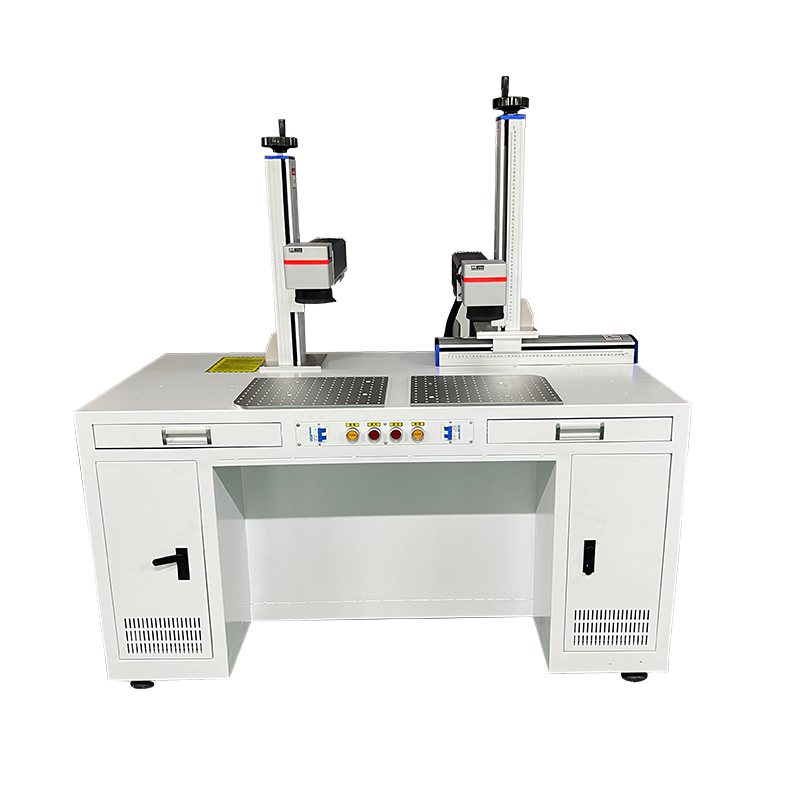
A lambd CO₂ or Fiber Laser Marking System eliminates these vulnerabilities. Using a focused laser beam, the system physically alters the packaging surface—foaming, carbonizing, or removing a surface layer—to create a permanent, high-contrast mark with zero inks, solvents, or glues. This non-contact process is inherently clean, meets FDA/EC food-contact material guidancewhen properly configured, and produces a code that simply cannot be removed without visibly damaging the pack. For food safety compliance (FSMA 204, EU Reg. 1169/2011) and brand protection, laser marking is rapidly becoming the new baseline in modern F&B plants.
2. Matching Laser Wavelength to Packaging Material: CO₂, Fiber & UV Solutions from lambd
Different packaging substrates absorb laser energy differently, so selecting the correct wavelength is critical for clean marking without compromising seal integrity. lambd CO₂ Laser Coders (10.6 µm / 9.3 µm) are the industry standard for non-metallic food packaging: they mark PET/PP/PE plastic bottles and caps, laminated snack pouches, coated cardboard cereal boxes, and Tetra Pak-type multilayer films with crisp date/batch codes or QR traces. The beam gently removes printed ink or surface coating (or foams the polymer itself) to reveal a contrasting mark—without burning through the film or weakening heat seals.
For metal cans, aluminum lids, and metallized foil pouches, a lambd Fiber Laser Marker (1064 nm) creates an annealed or ablated mark on the metal surface that survives retort sterilization (up to 121 °C / 250 °F), high-pressure washing, and long-term warehouse stacking. For heat-sensitive or dark-colored plastics and direct marking on eggshells or fruit skin, a lambd UV Laser Marker (355 nm) provides "cold processing" with minimal thermal load, preventing deformation or browning while delivering micro-text as small as 0.2 mm. lambd application engineers provide free sample testing to confirm the optimal wavelength, lens, and power for your exact pack format before you invest.
3. High-Speed On-the-Fly Coding: Integrating lambd Laser Markers Into Filling & Packaging Lines
Modern beverage and snack lines run at 200–800 packs/min—or faster. A coding device must keep up without slowing the line or requiring frequent stops for ribbon changes. lambd Online/Flying CO₂ Laser Marking Systems integrate directly with conveyor-mounted photo-eye sensors and PLCs via Ethernet, RS-232, or I/O ports. As each product passes beneath the scan head, the encoder-triggered system fires in sync with line speed, marking variable data (MFG date, EXP date, shift code, lot number, GS1-128 barcode, or DataMatrix) in < 50 ms per item—even on curved bottle surfaces or glossy foil.
Because there are no consumables to replenish and no printheads to clog, the lambd system runs 24/7 with only occasional lens cleaning. Software features include automatic date-shift calculation, serial number incrementation, and import of external database fields for "one-item-one-code" traceability. Parameters can be changed on the fly via HMI touchscreen or remotely through MES connection—no need to stop the conveyor. This plug-and-play compatibility lets F&B producers upgrade from inkjet to laser with minimal line modification and zero compromise on OEE (Overall Equipment Effectiveness).
4. Traceability, Anti-Counterfeiting & Consumer Engagement Via Laser-Etched Codes
Regulators and retailers increasingly require not just a visible expiry date but a machine-readable identifier that links each unit back to its production batch, raw-material lot, and quality-test record. lambd laser markers excel at engraving high-density QR codes, DataMatrix (ECC 200), and GS1 Digital Link codes on primary packaging (bottle cap interior, sleeve label, pouch face) and secondary packaging (carton flap, shipping case). These codes survive the full distribution cycle—resisting ice-water condensation, steam pasteurization, abrasive carton handling, and retail shelf wiping—so they remain scannable at checkout or by consumers via smartphone.
From a brand-protection standpoint, laser marks are irreversible and tamper-evident: attempting to grind or cover a laser-etched code leaves a conspicuous scar on the pack, discouraging expiry-date alteration or unauthorized refill (e.g., re-sealing a bottle after swapping contents). Some lambd configurations can also produce micro-text or low-contrast "hidden" marks detectable only under magnification, adding a discreet anti-counterfeit layer. When linked to a traceability platform, a scanned QR code can show consumers country of origin, allergen declarations, and recall status—turning a legal requirement into a trust-building engagement tool.
5. Total Cost of Ownership, Hygiene & Compliance: The Long-Term Case for Going Laser with lambd
Upfront, a laser coder may cost more than a basic inkjet printer—but the TCO (Total Cost of Ownership) tells a different story. Inkjet systems consume ink cartridges, makeup solvent, cleaning fluid, and replacement printheads; they require weekly maintenance and periodic professional servicing to address clogs and drift. By contrast, a lambd laser marker has no recurring consumable cost, uses air cooling, and typically exceeds 100,000 hours of MTBF. Over a 5-year horizon, most F&B users recover the price premium within 12–24 months purely on consumable and downtime savings.
From a hygiene perspective, removing ink from the filling hall reduces VOC emissions and eliminates the risk of ink splatter contaminating open product zones—an important consideration for AA/BRC/IFS-certified facilities. lambd cabinets and scan heads are designed with smooth surfaces and IP54–IP65 protection options for wash-down areas. Finally, permanent laser coding satisfies the legibility and permanence requirements of major food-safety frameworks worldwide, simplifying audit documentation. With lambd global technical support and a 2–3 year standard warranty, switching to laser is not just a compliance win—it is a sound financial and operational decision.
Conclusion: Mark Clean. Trace Deep. Build Trust with lambd.
In the food and beverage industry, a package code is far more than a printed date—it is a legal commitment, a recall safeguard, and a bridge of trust with the consumer. By replacing inkjet and labels with a lambd CO₂, Fiber, or UV Laser Marking System, producers gain contamination-free coding, permanent traceability-ready identifiers, high-speed inline performance, and lower long-term operating costs. Whether you run a craft brewery, a snack extrusion line, or a multinational dairy plant, lambd helps you match the right laser wavelength and configuration to your packaging—so every product that leaves your line carries a clear, untamperable promise of quality.
Post time: 06-25-2026