Start With the Hazard, Not the Machine Model
Laser safety is decided before the first part is marked: it is determined by wavelength, output power, beam path and who can reach it. The IEC 60825-1 standard classifies lasers by the injury potential of the accessible radiation, and most industrial marking systems sit in Class 3B or Class 4 when the beam is open — 1064 nm fiber, 355 nm UV and 10.6 µm CO₂ all fall into this category because the beam can damage the eye or skin even during a brief, unshielded exposure. A wavelength determines what is at risk: 1064 nm reaches the retina and is invisible, so the operator may not blink; 355 nm UV is strongly absorbed by the cornea and lens, causing photochemical injury; 10.6 µm CO₂ is absorbed at the surface and burns skin and the cornea. Power and pulse parameters decide the class, while the enclosure decides what the user actually sees. This is why a low-power machine is not automatically a low-hazard workplace: a 5 W open-beam marker still requires control measures, training and protective equipment. For an English-site buyer, the correct question is not “how many watts is it,” but “is the accessible beam fully contained, and what happens when a door, cover or sensor fails?” — and that answer must be documented before commissioning.
IEC 60825 and the Difference Between a Laser Class and a Workplace
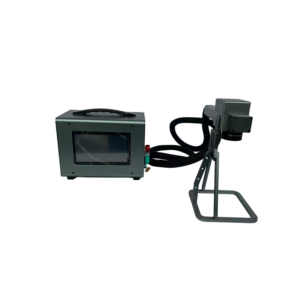
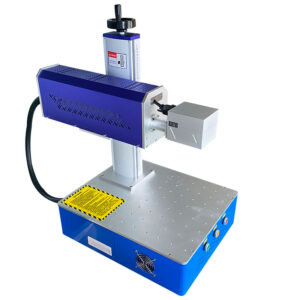
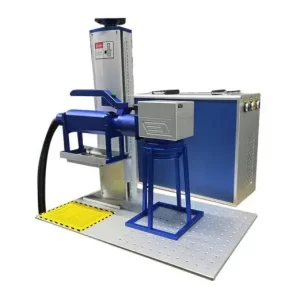
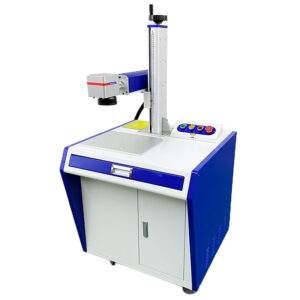
IEC 60825 is a product safety standard, not a complete workplace-safety program. It classifies the laser source and the laser product (Class 1, 1M, 2, 2M, 3R, 3B, 4); it does not replace local occupational rules, risk assessment, lockout, training or maintenance procedures. Class 1 means the accessible emission is below the hazard level under all reasonably foreseeable conditions — usually because the beam is fully enclosed. Class 4 is the highest and most hazardous class: the beam is dangerous to eyes and skin, can ignite material and may create hazardous fumes. Most LAMBD open-beam platforms — T6 Mini, LM-11-3, LM-1-x MOPA, LM-9-2, LM-4-6, LM-10-1, LM-8-1, UV-1-1, UV T3, CA2-1, CO₂-1-2 and CO₂-3-4 — are therefore treated as Class 4 equipment, even when the fiber source is only 5–20 W. A Class 1 enclosure is the engineering control that turns an open Class 4 system into a safe workstation: interlocked doors and panels prevent access while the beam is enabled, the frame and panels contain stray radiation, warning labels and indicator lights communicate status, and a controlled entry point prevents casual access. The enclosure must match the wavelength: polycarbonate windows and panels are selected by optical density for the specific laser, not by “clear plastic that looks strong.” LAMBD supplies safety hardware and integration options, but final classification, CE/UKCA or other conformity, and the employer’s safety file must follow the destination country’s regulations and the completed risk assessment.
Interlock, Access Control and the Startup Sequence
An interlock is not a switch you tape down; it is a safety function that removes hazard the moment a guard is opened. On a Class 1 enclosure, every door, hinged panel and removable cover that exposes the beam must have a monitored interlock connected to a safety circuit; when the guard opens, the laser is disabled, the shutter closes, stored energy is removed and a restart requires a deliberate reset. A key switch, emergency stop and controlled start prevent unauthorized or accidental operation, while warning lights and labels identify laser type, wavelength and class. For UV and CO₂ systems, the control sequence also includes chiller status: UV T3 and UV-1-1 use water cooling at 20–25 °C ±0.5 °C and must not run with a fault or low-flow condition, because a failed cooling loop changes beam stability and creates a secondary hazard. For CO₂ systems such as CA2-1, CO₂-1-2 and CO₂-3-4, the chiller and gas or tube conditions are part of the pre-start check. LM-9-2 enclosed cells are designed for this discipline: the part loads through an interlocked door or light curtain, the cycle starts only with the guard closed, and a CCD camera can verify the code after marking without opening the enclosure. LM-8-1 CCD adds a second safety benefit — the operator does not need to peer into the beam path to check part position, because the camera sees it. LAMBD’s recommendation is non-negotiable: never bypass, defeat or bridge an interlock, never watch the beam through a camera sensor with the naked eye, and never place a hand in the marking area while the system is enabled.
Fume, Extractor and Optics: The Hazards You Cannot See
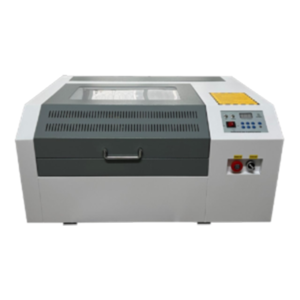
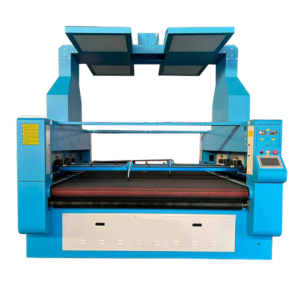
A permanent, zero-ink code is one of the main advantages of laser marking, but the plume it creates is part of the hazard assessment. Plastics, coatings, wood, leather, rubber, PVC, FR grades, zinc, magnesium and medical polymers can release particles, vapors, acid gases, VOCs or metal fumes when irradiated. A HEPA + activated-carbon extractor captures what the beam leaves behind; the filter type and airflow are selected for the material, not borrowed from a neighbor’s machine. LAMBD treats local extraction as mandatory for CA2-1, CO₂-1-2 and CO₂-3-4 work on organics and for medical, zinc and magnesium marking on fiber and UV systems. Smoke on the F-theta lens and protective window changes focus, reduces beam quality, burns the coating and shortens component life — so cleaning is both a safety and a quality task. Use only recommended wipes and solvent, lock out the laser before opening the head, and replace the window at the first sign of hazing. For UV systems, the risk profile includes UV radiation outside the beam path: enclosures, covers and interlocks must prevent access to the optical path and to the UV source, and operators must wear UV-rated laser safety glasses when any unshielded service is required. For high-power cutting on the 1390 fiber laser cutting machine, cutting fumes, slag, assist gas and reflective scrap add another layer of controls: gas selection, extractor, fire watch, slat cleaning and PPE are part of the same safety system.
CCD, Validation and the Complete 2026 Safety Workflow
CCD vision is a productivity feature that also supports safety: it lets the operator position, inspect and verify from outside the enclosure. On LM-8-1, the camera locates a randomly placed part, corrects offset and confirms the code after marking; on LM-9-2, a CCD cell can reject a part without anyone opening the guard. This reduces “looking into the work area,” which is one of the most common unsafe habits around open-beam markers. But CCD is not PPE and not a substitute for an enclosure: a camera cannot stop a beam, absorb stray radiation or replace an interlock. The complete 2026 workflow is therefore: (1) classify the laser product and document a risk assessment; (2) install a wavelength-matched Class 1 enclosure with monitored interlocks, warning labels and indicator lights; (3) verify chiller, gas, power and extraction before each shift; (4) train operators on the specific wavelength — 1064 nm, 355 nm or 10.6 µm — and the correct laser safety glasses; (5) lock out before any cleaning, focus check or maintenance; (6) use CCD to set up and verify without opening the guard; (7) keep records of interlock tests, filter changes, incidents and maintenance. LAMBD supports this with a common platform: EZCAD + JCZ control across fiber, UV and CO₂, shared spare-part discipline (galvo, F-theta, source, chiller), remote commissioning and a 1-year machine / 2-year source warranty; safety design and final conformity, however, remain a joint responsibility with the integrator and the employer. For an English-site reader, the practical rule is simple: do not buy a laser and hope the safety appears later — specify the Class 1 enclosure, interlocks, extractor and CCD before the machine arrives, because retrofitting safety is always more expensive than engineering it in.
Summary: Safety Is a System, Not a Switch or a Label
Laser safety in 2026 is built on three layers: product classification under IEC 60825, a Class 1 enclosure with interlocks that contains the beam, and a documented workplace process that covers training, extraction, maintenance and records. A Class 4 open-beam marker — whether 5 W or 100 W, fiber, UV or CO₂ — must never be treated as a toy or a low-risk office appliance; the accessible beam can injure eyes and skin, ignite material and generate hazardous fumes. 1064 nm fiber, 355 nm UV and 10.6 µm CO₂ each carry a different biological hazard, so PPE and enclosures must be specified for the actual wavelength. Interlocks, chiller status, assist gas and local extraction are safety functions, not optional accessories: they must be tested, maintained and never bypassed. CCD reduces exposure by moving positioning and inspection outside the enclosure, but cannot replace containment. LAMBD designs its range — T6 Mini, LM-11-3, LM-1-x, LM-9-2, LM-4-6, LM-10-1, LM-8-1, UV-1-1, UV T3, CA2-1, CO₂-1-2, CO₂-3-4 and the 1390 cutter — for integration with Class 1 guarding, interlocks, cameras and extractors, while keeping a common EZCAD + JCZ workflow, shared spare parts and a 1-year / 2-year warranty on machine and source. For an English-site buyer, the final message is direct: write the safety specification before the purchase order, validate it after installation, and operate it every shift — because the lowest total cost of a laser comes from a cell that protects people, parts and uptime at the same time.
Post time: 10-26-2026