
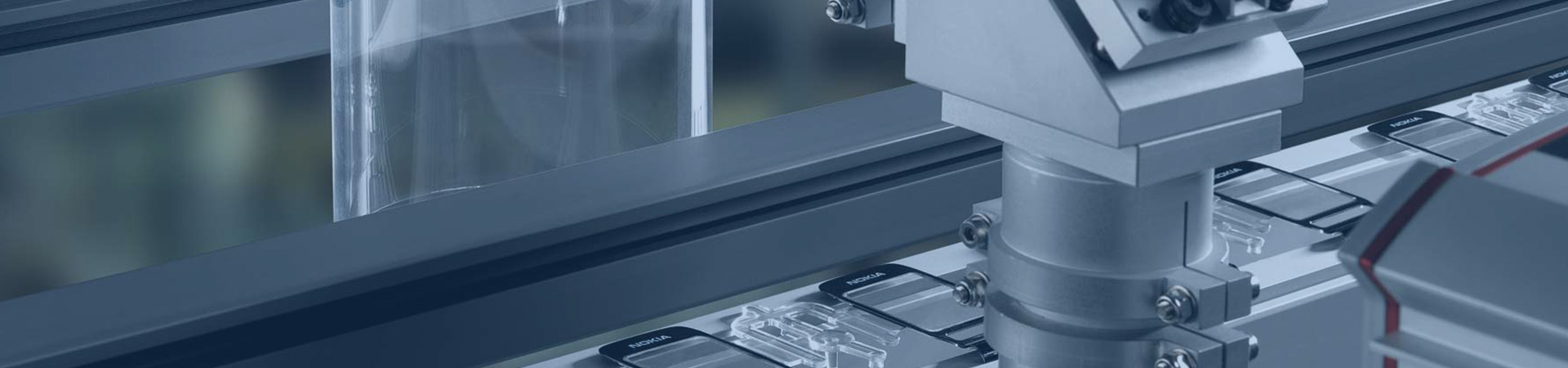
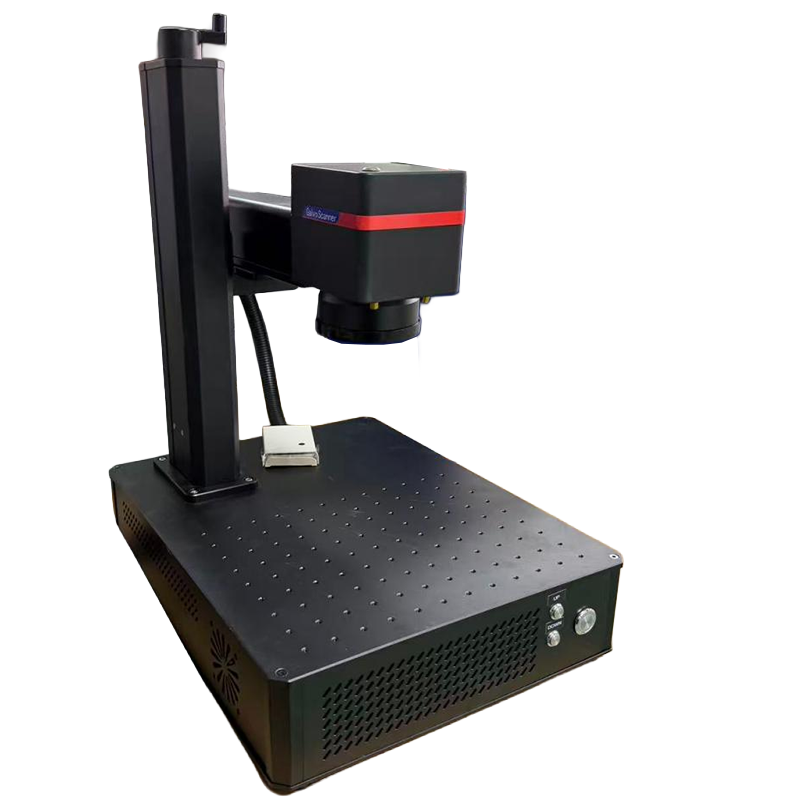
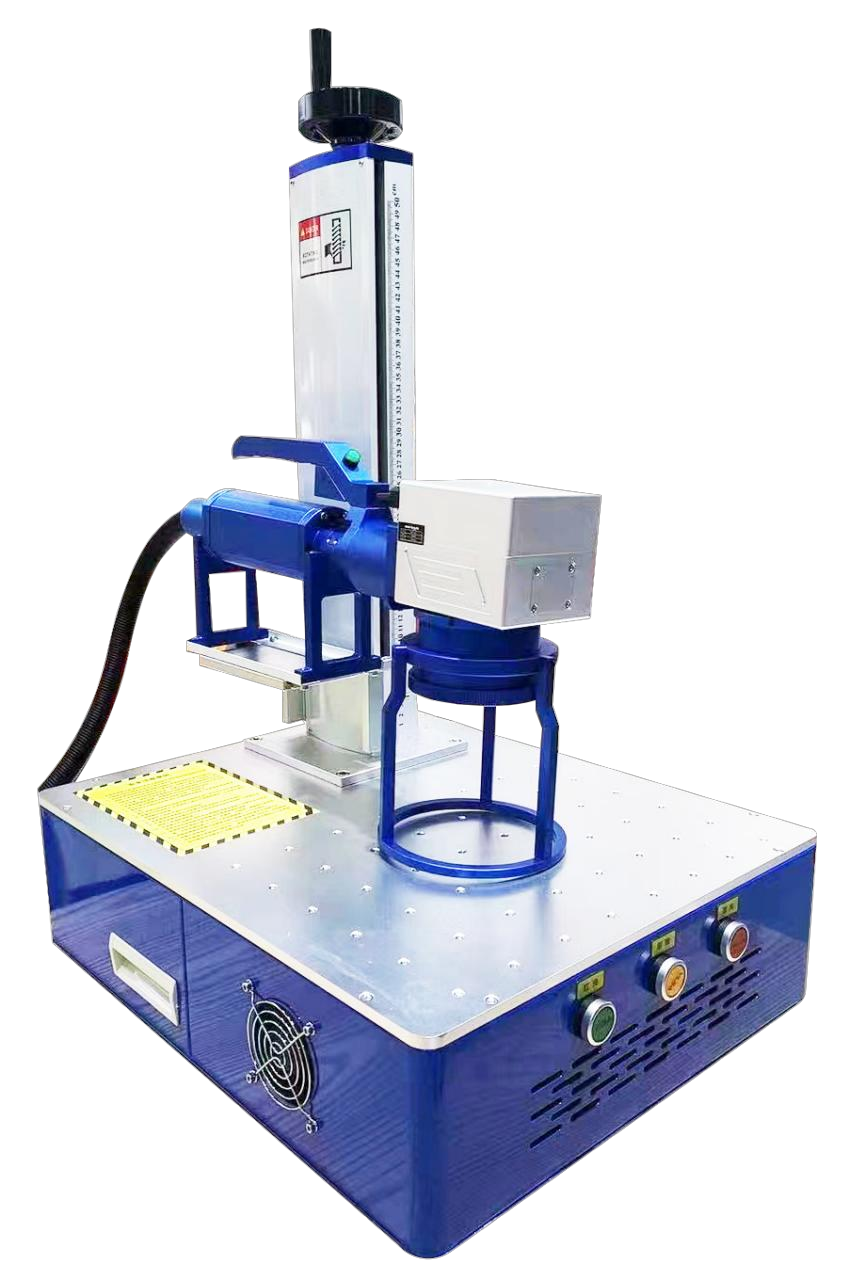
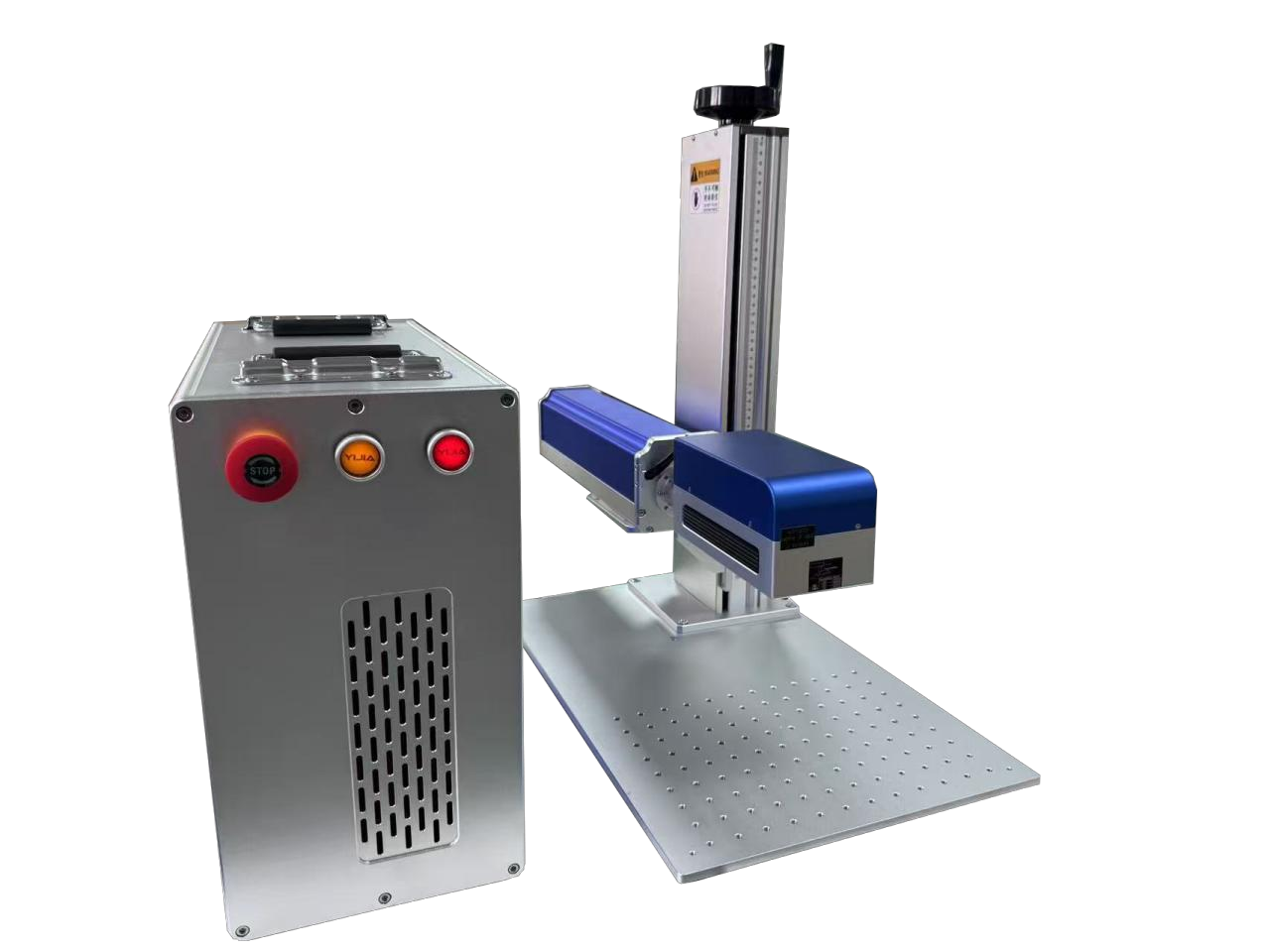
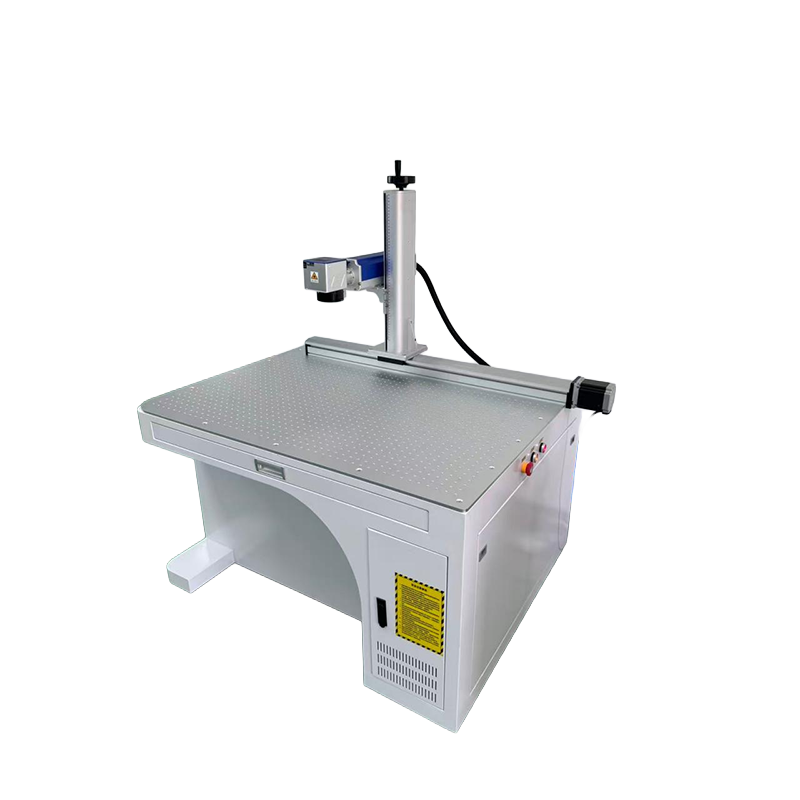
'Micro-engraving magic' on the chip — is a visual laser marking machine
Do you know how those QR codes and batch numbers, smaller than an ant's leg, are precisely printed on a semiconductor chip the size of a fingernail?
The answer lies in the 'visual laser marking machine.' In semiconductor chip manufacturing, the precision of this equipment directly determines the reliability of the chip's 'ID' (traceability mark)—even a deviation as tiny as one-tenth the width of a human hair can cause the chip to fail.
Today, let's break down this 'precision weapon' of chip manufacturing and talk about its core accuracy, technical secrets, and key points in practical applications~
1. First, Understand: The 3 Core Indicators for Measuring Precision
The precision of a visual laser marking machine is not a vague concept; it has clear quantitative standards, focusing on three main dimensions. Based on the parameters of mainstream industry models such as the Han's LM-N5301B and the IC-specific equipment from Zongheng Laser, the current level of mature technology is as follows:
Positioning Accuracy: Standard models ≤ ±75μm, while high-end models have achieved ±5~10μm. To give an intuitive example, a deviation of 0.01mm (10μm) is only about 1/10 the diameter of a human hair, ensuring markings are precisely placed on the designated area of a chip without touching critical pins.
Angle Compensation Accuracy: Can handle chip tilt deviations of ±15°, with automatic correction reducing angular error to ≤ ±0.01°. Even if a chip is placed a bit askew, the machine can 'self-correct' before marking.
Marking Size Accuracy: Can produce micro-characters as small as 0.2×0.2mm (smaller than a sesame seed), with line widths adjustable within 80 ± 20μm. Even lines so fine that they are difficult to see with the naked eye can be clearly formed.
Key point: When the industry talks about 'precision,' it is not a single number but the result of the combined action of the visual system, laser technology, and mechanical structure—without any one of these, micrometer-level precision cannot be achieved.
2. Precision Code: Why can it achieve 'micro-engraving level' marking?
The reason a visual laser marking machine can 'embroider' on chips lies in two key technological breakthroughs, along with the support of auxiliary systems:
1. Visual positioning system: Equips the machine with 'eagle eyes and an intelligent brain.'
Using industrial cameras with over 5 million pixels, it can accurately capture tiny feature points on the chip; combined with AI algorithms, it calculates the chip’s position and angular deviation in real-time, dynamically adjusting the marking coordinates. Even if the chip is placed at an angle or shifted, it can be precisely tracked, ensuring the marking position remains accurate.
2. Laser Control Technology: The laser is refined into an ultra-fine tip using ultraviolet or fiber lasers, capable of compressing the focal spot diameter to 10-20 μm (equivalent to 1/5 of a single hair). Combined with high-speed galvo scanning control at 3000 mm/s, it can achieve clear marking of fine lines and microcharacters while also improving marking efficiency.
3. Auxiliary Systems: To further ensure stability, multi-axis coordinated control (such as five-axis marking machines) can accommodate chips in different packaging forms. The closed-loop inspection system performs a 'post-check'—after marking, defects such as missing or incomplete characters are identified via post-mounted visual inspection, ensuring a marking repeatability of ≤2 μrad, fully in compliance with ISO 13666:2018 international standards.
3. Pitfall Avoidance Guide: These factors affect accuracy in actual production!
No matter how high the nominal precision of the equipment is, in real applications some details can still cause it to 'drop the ball.' Focus on these three key variables:
Chip packaging materials: bare chips, resin, and metal layers have different laser absorption rates. For example, metal layers have high reflectivity; if the laser parameters are not properly matched, it may cause blurred markings and reduced accuracy.
Environmental conditions: temperature fluctuations of ±1℃ or workshop vibrations exceeding 0.01mm/s can increase precision deviation by 20%. That’s why high-end chip production lines implement temperature control and vibration damping.
Equipment selection: for ordinary IC chips, machines with a standard precision of ±0.02~0.05mm are sufficient; for wafers or ultra-small chips, high-precision machines with ±0.005~0.01mm accuracy should be selected to avoid using equipment that is too advanced or too inadequate for the task.
4. Conclusion: The Industrial Significance Behind Precision
Nowadays, visual laser marking machines have become the "standard equipment" for mainstream packaged chips such as SOP, QFN, and BGA. Their level of precision not only meets the growing demand for smaller chips but also provides core support for traceability management and quality control in the semiconductor industry—each tiny mark on a chip serves as a "passport" of quality.
With the continuous advancement of laser technology and AI vision, the precision of this "micro-engraving marvel" will keep improving in the future, injecting more momentum into the high-quality development of the semiconductor industry.

Post time: 12-24-2025