Why Remote Setup Is No Longer a Nice-to-Have
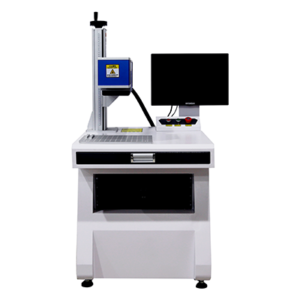
A laser marking machine is not a plug-and-play office printer. A typical 1064 nm fiber marker from lambd — whether a T6 Mini 5–20 W desktop unit, an LM-11-3 20–30 W bench model, or an LM-9-2 50–100 W enclosed production cell — needs the galvo calibrated, the F-theta lens aligned, the focal distance set, EZCAD installed on a Windows PC, the JCZ board recognized over USB, and a material recipe tuned for the exact alloy, coating thickness, and mark depth. In the past, a technician flew out for days; today, the whole process is routine over a video call, remote desktop and a calibrated USB camera. For buyers outside China, this changes the math: no visa, no flight, no two-week wait, and no miscommunication lost in translation. Remote commissioning also de-risks the handover — parameters are saved in EZCAD under named recipes ("SS_anneal_60kHz", "Al_anod_white_MOPA"), so the next operator recalls them instead of reinventing them. The result is a machine that is marking good parts within 24–72 hours of delivery, not weeks.
The lambd Remote Commissioning Playbook, Step by Step
A standard lambd remote commissioning run follows a fixed sequence, so nothing is left to chance. Day 0 — pre-ship check: the source (Raycus, Max or JPT), galvo, F-theta lens, red-light pointer and foot pedal are tested on the exact same alloy sample the customer will use. Day 1 — unbox and power: the buyer sends a video of the unpacking, lambd confirms the 220 V/50 Hz supply, <0.5 kW draw on 20–30 W air-cooled units, and the water chiller loop on UV T3 (355 nm, ~1 kW) before power-on. Day 2 — software and first mark: EZCAD is installed via shared screen, the JCZ board enumerates, a USB camera shows the focal plane, and the engineer walks the operator through focusing (motorized Z-axis on LM-11-3, manual knob on T6 Mini), then marks a test pattern at 20–100 kHz, 30–80 % power and 300–1500 mm/s. Day 3 — recipe transfer: serial numbering, date code, QR/Data Matrix and lot data are pulled from Excel via CSV, saved as variable-data jobs, and proven on 10–20 parts. For an LM-9-2 with CCD, the vision window is taught the part outline; for a rotary-axis job (rings, tubes, bottles), the 4th-axis plugin and reduction ratio are set. Every step is recorded in a commissioning PDF the buyer keeps.
Online Support That Actually Solves Problems
Where remote commissioning ends, online support begins — and this is where most vendors go quiet. lambd structures support around the three failure classes a marker actually has. Class A — software and files: EZCAD layer order, hatch direction, DPI, barcode quiet zone, DXF splines, AI fonts and CSV column mapping. These are solved in minutes over screen share; most are fixed by re-importing the file with "join curves" and "auto-close" enabled. Class B — parameters and material: a stainless anneal going grey instead of black is usually frequency and speed (drop to 60–80 kHz, raise to 800–1500 mm/s); a white mark on anodized aluminum needs MOPA pulse width tuning on LM-1-5/LM-1-6. Class C — hardware: galvo drift, lens contamination, source warning codes, chiller alarms. Here lambd ships the spare part from a shared stock (lens, galvo, source, chiller pump) and talks the buyer through the swap on a call. The whole catalog — T6 Mini, LM-11-2, LM-11-3, LM-9-2, LM-4-6/4-8/4-9, LM-1-x, LM-10-1, LM-8-1 CCD, UV T3, CO₂ CA2-1, CO₂-1-2 — runs on one EZCAD + JCZ platform, so a support engineer already knows the software stack before the call starts.
What the Buyer Must Prepare for a Smooth Remote Session
Remote works only when the buyer prepares four things in advance. First, a sample of the real part — not a photo, not a similar alloy. Galvo speed and pulse settings are material-specific; a 304 stainless coupon gives the right recipe, a 430 coupon does not. Second, network access: a stable connection for video plus TeamViewer / AnyDesk / a Chinese alternative so the engineer can drive EZCAD directly. Third, the right PC: Windows 10/11, one free USB port for the JCZ board, and local admin rights to install the EZCAD runtime and dongle driver. Fourth, safety and setup: a grounded outlet at 220 V/50 Hz, a clean dust-free table (humidity 5–95 %, non-condensing), fume extraction for PVC and coated metals, and an interlocked enclosure for Class-1 operation on the LM-9-2. For UV T3, add the chiller: distilled water or antifreeze, no air cooling, and a plan for sub-zero workshops in winter. When these four are ready, first-article approval is usually a single session; when they are not, delays are self-inflicted. This is also why lambd sends a pre-commissioning checklist PDF before shipment — it turns the buyer into a competent remote partner rather than a passive observer.
ROI of Remote: Faster Start-Up, Lower Total Cost, Global Reach
The financial case for remote commissioning is direct. A single on-site visit — engineer flights, hotel, visa, daily rate, lost production — commonly runs $2,000–5,000 and still misses the moment a parameter drifts three months later. A remote session is a video call and a shared screen; follow-up support costs a fraction, and a 1-year machine / 2-year source warranty plus 100,000-hour source rating mean the recurring exposure is small. Throughput returns faster too: an LM-11-3 30 W marking a 12×12 Data Matrix in ~1.5 seconds, a T6 Mini 20 W engraving a ring in 30 seconds, or a UV T3 5 W coding a glass vial in ~1.5 seconds — every day of delay is paid in lost pieces. Remote also scales globally: the same engineer supports T6 Mini in a jewelry shop, LM-9-2 on a 24/7 line, UV T3 in a pharma cleanroom and CO₂-1-2 on a roll-fed fabric line, because the platform is identical. For an English-site buyer, the message is operational: ask not only "do you ship to my country," but "can you commission it remotely and support it at 2 a.m. my time" — with lambd, the answer is built into the product design, the shared EZCAD stack, the pre-ship checklist and the named-recipe handover.
Summary: Remote Is the New Standard, Not a Backup Plan
Remote commissioning and online support are how a lambd laser marker becomes productive, not a box in the corner. The playbook is deliberate: pre-ship test on the real alloy → guided unboxing and power-up → shared-screen EZCAD setup → recipe transfer from Excel → a commissioning PDF the buyer keeps. Support then covers software fixes, parameter tuning and hardware swaps on one EZCAD + JCZ platform across the full range — T6 Mini, LM-11-3, LM-9-2, LM-1-x MOPA, LM-4-6 handheld, LM-10-1 flying marker, LM-8-1 CCD, UV T3 355 nm and CO₂ CA2-1. Buyers do their part with a real sample, stable network, Windows PC and correct 220 V/50 Hz setup; in return they get first good parts in 24–72 hours, no travel cost, and a named recipe library that survives staff turnover. The ROI is concrete: $2,000–5,000 saved per avoided on-site visit, faster throughput, and a warranty-backed 100,000-hour source. For an English-site audience, the takeaway is trust through proof: remote commissioning is not a compromise forced by distance — it is the faster, cheaper and more reproducible way to start a laser marking cell.
Post time: 09-14-2026