What “Zero-Consumable” Actually Means on the Shop Floor
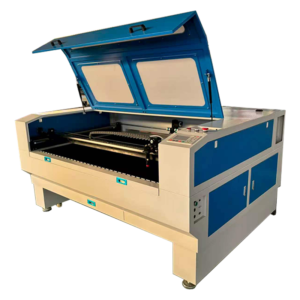
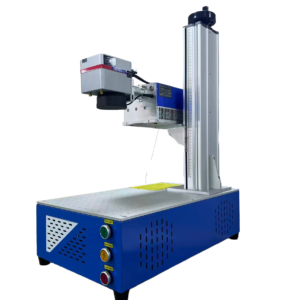
Zero-consumable manufacturing is not a slogan — it is the removal of every recurring material you used to buy, store, dispose of, and account for in the marking process. A fiber laser marker from lambd (T6 Mini 5–20 W, LM-11-3 20–30 W, LM-9-2 50–100 W) needs no ink, no solvent, no ribbon, no label stock, no printhead, no marking spray, and no chemical etchant. The beam comes from a 1064 nm ytterbium-doped fiber, is steered by a galvo, focused by an F-theta lens, and writes directly onto metal, anodized aluminum, some hard plastics, and coated parts. The machine runs on electricity only — the standard 20–30 W units draw <0.5 kW from a 220 V/50 Hz single-phase supply, air-cooled, with no chiller or water loop. The source is rated for 100,000 hours, the spot is 30–50 µm, repeatability is ±0.001 mm, minimum line width 0.01 mm, and marking speed reaches ≤7000 mm/s. EZCAD (JCZ board) handles BMP, JPG, GIF, PNG, TIF, AI, DXF, DST and PLT, including variable data from Excel. Compare that to a CIJ inkjet line: ink, makeup fluid, solvent, filters, nozzles, printheads, labels, ribbons, release liner, and the labour to swap them. “Zero consumable” means the recurring bill collapses to power, a wipe of isopropanol, and the occasional lens clean.
The Five Consumables Laser Marking Eliminates (and Their Real Cost)
Let us name the five recurring costs a lambd fiber marker erases. First, ink and solvent — a typical CIJ line spends $2,000–4,000 per year on fluids and filters for one shift, plus VOC handling and disposal. Second, labels, ribbons and release liner — a serialized tag program can burn $0.01–0.05 per piece before you count the labeler, the applicator, and the misapplied labels that jam or fall off. Third, printheads and nozzles — these fail unpredictably, stop the line, and cost hundreds to replace; a fiber source has no ink path at all. Fourth, marking sprays and films used by CO₂ or fiber on reflective metals — they add a coating step, a cure/dry step, and a chemical waste stream. Fifth, rework from unreadable codes — inkjet contrast drifts as nozzles age, so you relabel or scrap; laser contrast on stainless, anodized aluminum, brass and titanium stays at 99.8 %+ readability when parameters are locked in EZCAD. On a magnesium AZ31B or ZAMAK zinc part, the same logic applies: the laser forms an oxide mark (MgO/ZnO) with no pigment, while a spray-based “mark” would need a coating process and would not survive plating or powder coat. Eliminating consumables is therefore not just thrift — it removes five failure points from the cell.
Numbers: TCO and Payback in a Two-Shift Shop
The economics are visible on a five-year total cost of ownership (TCO) sheet. Capital cost (CapEx) for a 30 W lambd LM-11-3 is higher than a CIJ printer, but the operating line changes dramatically: inkjet recurring costs run roughly $3,000–5,000 per year per shift (fluids, filters, labels, service), while the fiber’s recurring cost is electricity (~0.5 kW × 16 h × 300 days ≈ $240/year at US commercial rates) plus occasional lens tissue and isopropanol. At two shifts, the CIJ annual recurring cost doubles; the fiber adds almost nothing because it is air-cooled and consumes no materials. Cross the curves and payback lands at roughly 12–30 months, after which years 3–8 are nearly pure savings. A T6 Mini 20 W in a jewelry shop follows the same arithmetic on a smaller scale: 40 rings/day, no foil, no diamond-tip wear, no pantograph template library — the per-piece cost becomes a rounding error. lambd supports this with a 1-year machine / 2-year source warranty, a 100,000-hour source rating, and a shared spare-part list (lens, galvo, source, chiller pump on UV), so service cost stays bounded and predictable. The number that matters for a buyer is not the sticker price; it is recurring cost per readable mark.
Quality and Compliance: Zero Consumable Is Also Zero Contamination
A consumable-free cell is a cleaner cell. No ink means no VOC, no solvent vapour, no aerosol droplets, and no label adhesive outgassing — relevant for ISO 7/Class 10,000 cleanrooms in medical-device and pharmaceutical marking. The lambd LM-9-2 enclosed marker adds a Class-1 interlocked cabinet, fume extraction port, and CCD vision, so the mark is made inside a sealed volume and the operator never sees the beam. On stainless steel, a low-power anneal at 60–80 kHz, 800–1500 mm/s creates a black UDI code with zero material removal — important when corrosion resistance and surface profile must survive 100+ autoclave cycles. On anodized aluminum, a single pass at 20–30 % power, 40 kHz, 1500 mm/s produces a white logo without stripping the anodic layer; on bare 6061, 30–50 % power, 40–60 kHz, 500–800 mm/s, 2 passes yields grey Al₂O₃ micro-dots. These are not “ink colors” that fade or transfer; they are permanent oxide, anneal, or micro-relief structures readable at 99.8 %+ under ISO/IEC 15415. For IATF 16949, UDI, CE, RoHS, EAC and Честный ЗНАК traceability, a mark with no label to peel and no ink to smear is an audit advantage: the digital passport is on the part itself.
Deployment: One EZCAD Stack Across Fiber, UV and CO₂
Zero-consumable does not mean one-wavelength-fits-all. lambd keeps the same software and control stack across its range so a shop can cover materials without stacking consumables or learning three programs. 1064 nm fiber (T6 Mini, LM-11-3, LM-9-2, LM-4-6 handheld, LM-1-x) marks steel, aluminum, brass, copper, titanium, magnesium, zinc and hard plastics — air-cooled below 30 W, <0.5 kW. 355 nm UV (T3 3/5/10 W Split Type) does cold marking on transparent acrylic, glass, PVC, PET, PCB and ampoules — water-cooled because the 1064→355 nm conversion wastes heat in the crystals. 10.6 µm CO₂ (CA2-1 30 W, CO₂-1-2 100 W) handles acrylic, leather, wood, cardboard and roll-fed fabric. All share EZCAD + JCZ, the same file formats, the same rotary-axis and CCD options, and one spare-part logistics chain. A two-shift shop can therefore run metal nameplates on LM-11-3, rings on T6 Mini, and glass vials on UV T3 — no ink, no ribbon, no label, no solvent anywhere on the floor. Operators switch jobs in the same software, recipes are saved per alloy and material, and throughput is limited only by part handling, not by drying time or ribbon changes.
Summary: The Shop Floor Moves From Buying Consumables to Buying Uptime
Zero-consumable manufacturing is the shift from a recurring purchase order to a one-time capital decision. A lambd fiber marker replaces ink, solvent, labels, ribbon, printheads, sprays and etchants with a focused 1064 nm beam, air cooling below 30 W, <0.5 kW draw, a 100,000-hour source, ±0.001 mm repeatability and ≤7000 mm/s marking — then proves it on the balance sheet with 12–30 month payback and 99.8 %+ code readability. It also removes VOC, contamination risk, drying time, label peeling and nozzle drift, which is why zero-consumable marking is now a compliance story as much as a cost story: UDI, IATF 16949, ISO/IEC 15415 and Честный ЗНАК all favor a permanent, scannable mark that needs no consumable to exist. The same EZCAD/JCZ platform scales from a 5 W T6 Mini for rings to a 100 W LM-9-2 for 24/7 lines, and spans fiber, UV and CO₂ without changing the operator workflow. For an English-site buyer, the takeaway is operational: a zero-consumable shop floor is not a green slogan — it is fewer failure points, lower TCO, and a digital traceability mark that survives plating, powder coat, sterilization and 100,000 hours of production.
Post time: 09-07-2026